


In our latest paper, published in Forensic Science International: Synergy, we looked at algorithmic inconsistencies in the DataMaster DMT
The paper is titled: Same pattern, different result: Algorithmic inconsistency in breath alcohol testing–case reports.
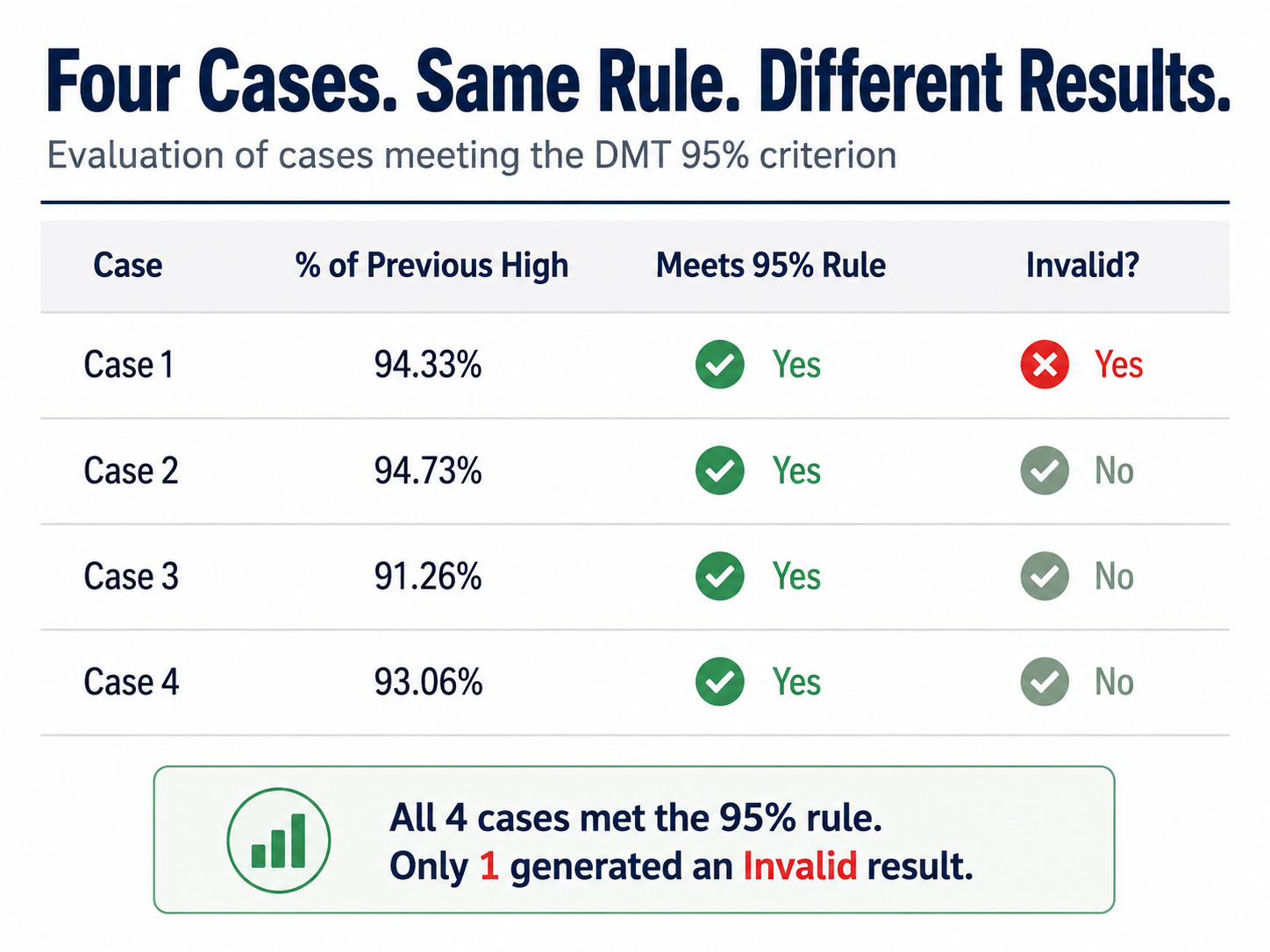
We looked at four cases involving the instrument’s stated “95% rule.”
Under that criterion, the instrument is expected to generate an Invalid status message when the final quarter-second average breath alcohol value is less than 95% of a previous high value during the same sample window.
In all four cases, the stated criteria were met.
Yet only one case generated an Invalid status message.
The other three did not.
That raises the question: if the same rule is applied in each case, why does the instrument produce different outcomes?
The training materials did not explain the difference.
Without access to the source code, it is not possible to determine whether the discrepancy was caused by hidden parameters, rounding rules, sampling intervals, or some other software logic.
This is why source code matters.
Forensic instruments are increasingly software-driven. When software determines whether evidence is accepted or rejected, the logic behind those decisions should be transparent, validated, and open to independent review.
If a rule is published, it should either be applied consistently or the additional conditions governing it should be disclosed.
The paper is linked below for anyone interested in the details:
https://www.sciencedirect.com/science/article/pii/S2589871X2600032X